
Friday June 19 * 6pm * Free * RSVP
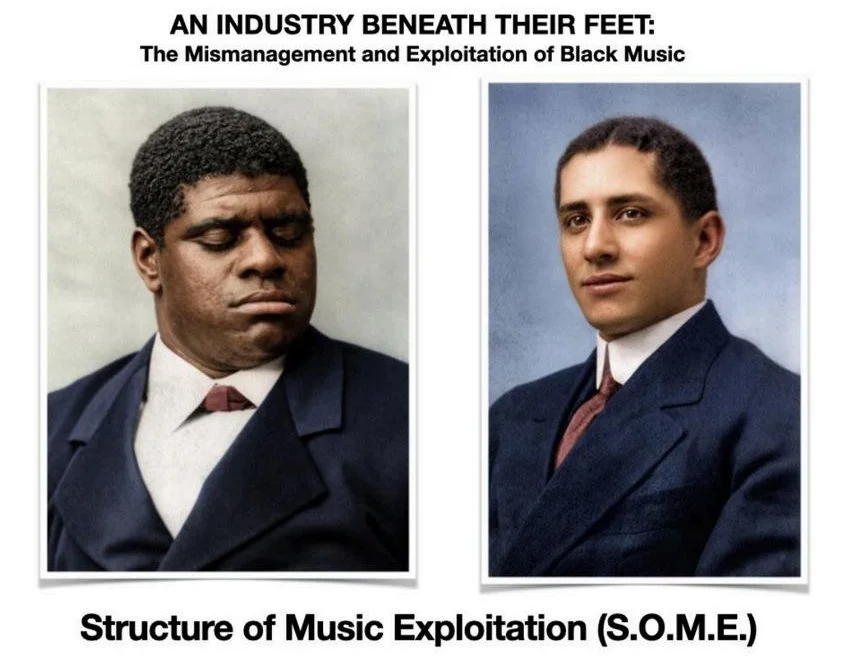
Structures of Music Exploitation (S.O.M.E.)
Speaker: Norman Kelley, editor, R&B (Rhythm and Business): The Political Economy of Black Music (Akashic Books 2002); The Head Negro in Charge Syndrome (Nation Books, 2004).
Overview
Structure of Music Exploitation (aka the “structure of stealing") examines the various methods used to extract wealth from black talent and music. Drawing from Norman Kelley’s unpublished work, An Industry Beneath Their Feet: The Mismanagement and Exploitation of Black Music, he will examine:
1. “Blind Tom” Wiggins: An enslaved child music prodigy during the antebellum period, Wiggins remained in legal bondage after the Civil War, still “owned” by his former enslavers.
2. Black Swan Records and the Music Recording Industry: The rise and fall of the first black recording company during the Harlem Renaissance within the context of the music recording industry during the era of “race records.”
3. Motown: As the most successful black recording company to date, Motown represented the good, the bad and the ugly of black entrepreneurship as well as a model of urban economic development.
4. Action Intellectuals vs. Soul Power: Despite the success of Motown and the prominence of James Brown, both white policy makers and Black Power theorists ignored the economic and social potential of black popular music during the 1960s.
5. The Harvard Report vs. The NAACP’s “Discordant Sound of Music”: When Motown began scoring hits, white-owned major labels devised a feasibility study to capture the sound of contemporary black popular music while the NAACP was asleep at the wheel.
In each case he will argue how the structure of exploitation within the music recording industry made it possible for black music and black talent to be exploited with impunity. However, the presentation will also argue that African Americans, in some cases, failed to – in the best sense of the word–exploit their own folk culture as a resource as well as showing examples of blacks who took advantage of black talent’s naivete.
This presentation critically assesses how the absence of an integrated economic strategy—one linking politics, culture, and commerce—led to the persistent pattern of artistic brilliance and economic marginalization. The talk invites audiences to reconsider how economic empowerment could emerge from cultural innovation.
About the Speaker
Norman Kelley is the author of The Head Negro in Charge Syndrome: The Dead End of Black Politics (Nation Books, 2004). In 2013, he produced and directed the documentary How Washington Really Works: Charlie Peters and the Washington Monthly. His fiction includes Black Heat (Amistad, 2001; Cool Grove, 1997), The Big Mango (Akashic Books, 2002), and A Phat Death (Akashic Books, 2003). He edited and contributed to R&B (Rhythm and Business): The Political Economy of Black Music (Akashic Books, 2005; 2002), and contributed to That’s the Joint: The Hip Hop Studies Reader (Routledge, 2005) and Gig: Americans Talk About Their Jobs at the Turn of the Millennium (Random House, 2000). Kelley has appeared on NPR’s Tavis Smiley and C-SPAN’s Washington Journal, created the podcast series From Black Power to Black Trauma (2023), and was featured in Paid in Full: The Battle for Black Music, a BBC/CBC documentary executive produced by Idris Elba.